The world is designed for people who sleep at night. If you work shifts—nurses, security guards, factory workers, first responders—you are fighting biology every single day.
Shift Work Sleep Disorder is real. The isolation, the brain fog, and the constant battle against the sun can lead to severe burnout. Standard advice ("Go for a morning walk!") literally doesn't apply to you. You need a specialized toolkit.
Here is how to stay mindful and physically safe when the rest of the world is asleep.
Phase 1: The "False Morning" (Before Work)
Don't just wake up and rush. Your body needs a cue that "Day" has started, even if it is 8:00 PM.
1. Light Blasting
The Protocol: Turn on all the lights in your house immediately upon waking. Why: Light suppresses melatonin. You need to trick your Pineal Gland into thinking the sun just came up. If you have a SAD Lamp (10,000 Lux), sit in front of it for 20 minutes while you drink your coffee.
2. The Anchor Meal
The Protocol: Eat a meal with someone you love before you leave. Why: Night shift is isolating. Connecting with "Day Walkers" before you vanish into the night anchors your humanity.
Phase 2: The Shift (The 3 AM Slump)
Between 2:00 AM and 4:00 AM, your core body temperature hits its lowest point (the "Nadir"). Your urge to sleep hits a biological peak. This is the danger zone for medical errors and accidents.
3. Micro-Movement Snacking
The Protocol: Every hour, do 60 seconds of squats or brisk walking. Why: Movement pumps glucose to the brain. It is better than caffeine at this hour (because caffeine after 2 AM will ruin your sleep for the next day).
4. The "Checkpoint" Breath
The Protocol: Every time you wash your hands or pass a specific doorway:
- Stop.
- Take one deep breath.
- Ask: "How am I doing right now?" (Thirsty? Frustrated? Dizzy?)
- Address the need immediately.
Phase 3: The Commute Home (The Vampire Sprint)
The sun is your enemy right now.
5. The Sunglasses Rule
The Protocol: Wear dark sunglasses on the drive home, even if it is cloudy. Why: Morning sunlight hitting your retina screams "WAKE UP" to your brain, just as you are trying to wind down to sleep. Blocks the blue light.
Phase 4: Day Sleeping (The Hard Part)
The neighbor is mowing the lawn. The Amazon delivery guy is ringing the doorbell.
6. The Decompression Shower
The Protocol: Take a warm shower in the dark (or candlelight). Why: It washes off the "hospital/factory" energy. The warmth brings blood to the skin surface, causing a subsequent drop in core temp, which induces sleep.
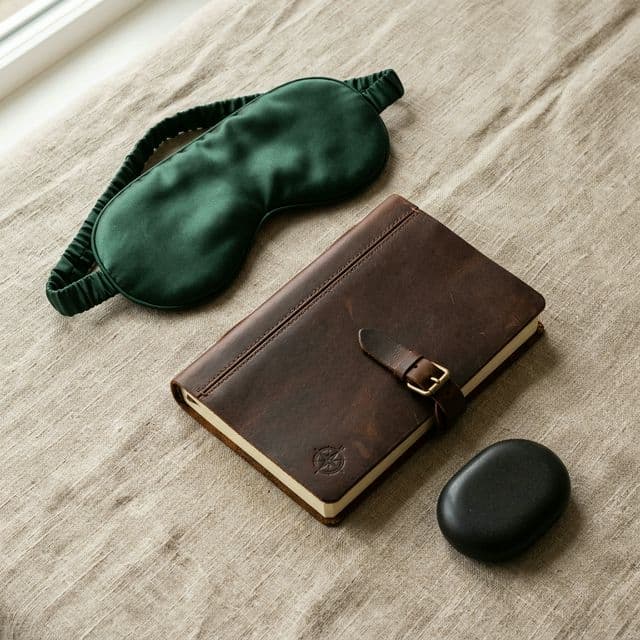
7. Blackout Everything
The Protocol: You need a cave.
- Blackout curtains (tape them to the wall).
- Eye Mask.
- Earplugs + Brown Noise. You cannot rely on "it's quiet enough." You need sensory deprivation.
FAQ: Shift Work Wellness
Should I nap during my shift?
If your workplace allows it, a 15-20 minute nap (The NASA Nap) can be restorative. Do NOT sleep longer than 20 minutes, or you will enter deep sleep and wake up with "Sleep Inertia" (grogginess), making you dangerous.
What about caffeine?
Cutoff Time: 5 hours before your shift ends. If you get off at 7 AM, your last coffee is at 2 AM. Hard stop.
I feel lonely.
Shift work is lonely. Find a "Night Shift Buddy"—someone else awake at those hours—to text memes or check in with during breaks. You need a tribe.
Conclusion
You are keeping the world running while it sleeps. It is a noble, difficult service. Treat your body with extreme kindness; it is doing heavy lifting against biology.
Try This Tonight: Wear sunglasses driving home tomorrow morning. Notice how much easier it is to fall asleep.
Next Read:
Budget Wellness Editorial
Wellness Researcher
Specializing in zero-cost mental wellness strategies and breathing techniques.
Join Our Wellness Community
Get one daily, zero-cost wellness habit delivered straight to your Telegram. No noise, just peace.
Join Telegram Community